Ready to build your career in Generative AI? Get certified and unlock new opportunities. Grab now

Chennai: +91-9707250260 Bangalore: +91-8767260270 Online: +91-8099770770 Hire Talent (HR): +91-9707240250

Generative AI Certification Training

Build In-Demand Skills with Generative AI Training.

Join Besant Technologies for the Best Generative AI Training in Chennai, Bangalore & Online. Learn Generative AI, Prompt Engineering, Large Language Models (LLMs) and Real-World Applications with Expert Trainers.

  • Learn Industry-Relevant Generative AI Skills
  • 15+ Years of Experience in Software Training & Placements
  • 20+ Branches in Chennai & Bangalore

4.9 Ratings

12.7k Learners

Our Certificates

Earn valuable credentials and recognition

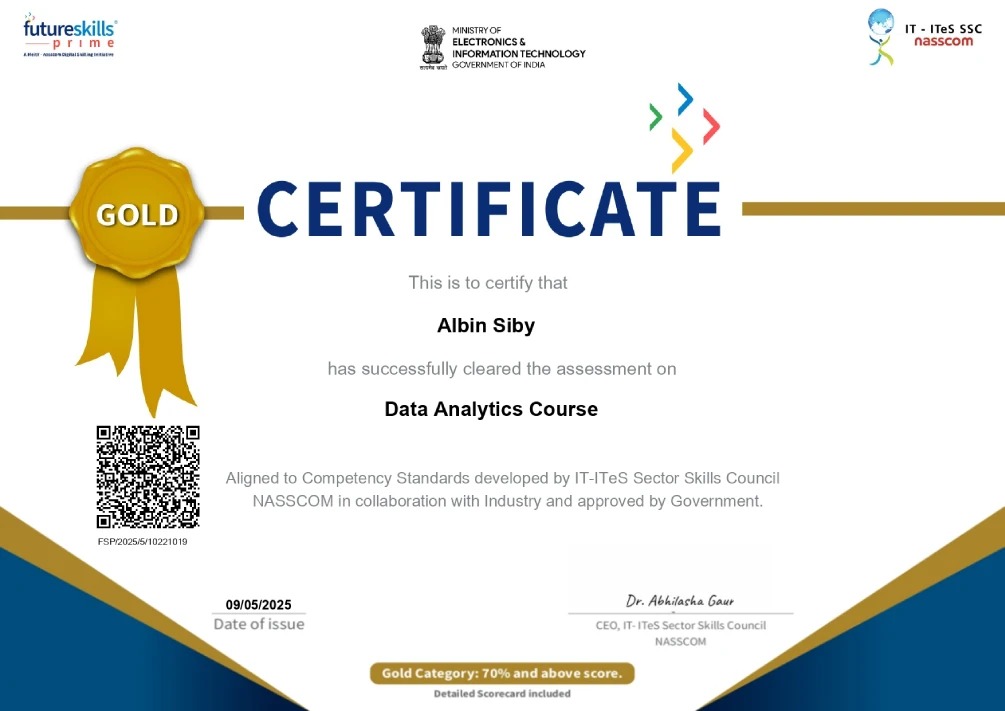
  • Earn Certification NASSCOM Future Skills
  • Six Months Internship Certificate
certificate NASSCOM Future Skills
Letter Letter for Internship Completion
certificate Course Completion Certificate

What you’ll learn

Program Highlights

Flexible Generative AI learning format

Flexible Learning Options

Learn Generative AI through convenient online and classroom training with expert guidance.

Career support for Generative AI learners

Career Guidance & Support

Get resume preparation, interview guidance and support to explore Generative AI job opportunities.

Learn Generative AI from experienced trainers

Learn from Industry Experts

Gain practical knowledge from experienced trainers with real-world industry insights.

Structured Generative AI training program

Structured Training & Mentorship

Follow a well-planned Generative AI course with continuous trainer support and guidance.

Hands-on Generative AI projects

Practical Project Experience

Work on hands-on Generative AI projects and apply your skills to real-world business scenarios.

Data Science Course Content

Python for AI Engineering

Topics:

  • Python fundamentals – quick revision
  • Data types and collections
  • Conditional statements and loops
  • Functions, modules and packages
  • List and dictionary comprehensions
  • Exception handling and file handling
  • JSON handling and basic OOP
  • Virtual environments and package management
  • HTTP requests and REST API integration
  • Environment variables and secrets management
  • Asynchronous programming – async / await
  • Logging, debugging and unit testing basics

Artificial Intelligence Fundamentals

Topics:

  • Introduction to Artificial Intelligence
  • Types of AI
  • AI vs Machine Learning vs Deep Learning vs Generative AI
  • Rule-based systems vs learning-based systems

Machine Learning Fundamentals

Topics:

  • Introduction to Machine Learning
  • Supervised, unsupervised and reinforcement learning
  • Training, validation and test data
  • Features, labels and datasets
  • Classification and regression
  • Clustering
  • Model training and prediction
  • Overfitting and underfitting
  • Model evaluation basics

Deep Learning Fundamentals

Topics:

  • Introduction to Deep Learning
  • Neural networks
  • Neurons, weights and biases
  • Activation functions
  • Training vs inference
  • Transformers – introductory understanding

Natural Language Processing

Topics:

  • Introduction to NLP
  • Text preprocessing and tokenization
  • Stemming and lemmatization
  • Stop words and text normalization
  • N-grams and text representation
  • Bag of Words and TF-IDF
  • Word embeddings – basics
  • Semantic similarity
  • Traditional NLP vs LLM-based NLP

Generative AI Fundamentals

Topics:

  • Introduction to Generative AI
  • Generative AI vs traditional AI
  • Types of generative models
  • How Generative AI works
  • Foundation models
  • Training vs fine-tuning vs inference
  • Capabilities and limitations of Generative AI

Large Language Models (LLMs)

Topics:

  • Introduction to LLMs
  • LLM architecture – high-level understanding
  • Transformer architecture
  • Tokens and tokenization
  • Context window and context length
  • Attention mechanism – basics
  • Pre-training, fine-tuning and inference
  • Temperature, Top-p and Max Tokens
  • LLM input, output and text generation
  • Streaming responses
  • Hallucinations and LLM limitations
  • Open-weight LLMs – Llama, Qwen and Gemma
  • Quantization – basics
  • LLM API interaction
  • Structured outputs – JSON and schema-based responses

Prompt Engineering

Topics:

  • Prompt structure and best practices
  • System prompts and user prompts
  • Zero-shot and few-shot prompting
  • Contextual prompting
  • Structured output prompting
  • Prompt templates and variables
  • Prompt chaining
  • Prompt testing and optimization
  • Prompt injection – basics

LLM Application Development

Topics:

  • LLM API integration
  • Chat completion and response handling
  • Streaming responses
  • Conversation history and multi-turn chat
  • Structured outputs and JSON responses
  • Error handling, retries and timeouts
  • Basic LLM application development

Embeddings & Semantic Search

Topics:

  • Text embeddings
  • Embedding models
  • Semantic similarity
  • Cosine similarity
  • Semantic search

Vector Databases

Topics:

  • Introduction to vector databases
  • Vector storage and retrieval
  • Similarity search
  • Metadata filtering
  • Vector database indexing – basics
  • FAISS, ChromaDB and Qdrant – overview and practical use

Retrieval-Augmented Generation (RAG)

Topics:

  • RAG fundamentals and architecture
  • Document loading and parsing
  • Text chunking strategies
  • Embedding generation and storage
  • Retrieval strategies
  • Similarity search and metadata filtering
  • Context construction and prompt augmentation
  • RAG response generation and source citations
  • RAG evaluation – basics
  • Advanced RAG – reranking and hybrid search

AI Agents & Agentic AI

Topics:

  • AI agent fundamentals
  • Agents vs traditional LLM applications
  • Tools and function calling
  • Agent workflows and decision-making
  • Multi-step task execution
  • Memory in AI agents
  • Multi-agent systems – basics
  • Human-in-the-loop
  • Agent evaluation and safety – basics

LLM Frameworks & Orchestration

Topics:

  • LLM frameworks – purpose and use cases
  • LangChain fundamentals
  • LangGraph fundamentals
  • Chains and workflows
  • Tool integration and orchestration
  • State management and workflow control

LLM Evaluation & Guardrails

Topics:

  • LLM output evaluation
  • Response quality and accuracy
  • RAG retrieval and answer quality
  • Hallucination detection
  • LLM-as-a-Judge – basics
  • Guardrails and output validation
  • Input/output safety filtering
  • Evaluation datasets and test cases

GenAI Security

Topics:

  • Prompt injection and jailbreaking
  • Sensitive data protection
  • Secure API key and secrets management
  • Data privacy and PII protection
  • LLM application security
  • Tool and agent security

GenAI Cost Optimization & Performance

Topics:

  • Token usage and cost estimation
  • Prompt optimization and token reduction
  • Semantic caching
  • Model selection and cost optimization
  • Latency optimization
  • Rate limits and retry strategies

GenAI Backend Development & APIs

Topics:

  • REST API development using FastAPI
  • Request and response handling
  • Pydantic and data validation
  • Asynchronous programming – async / await
  • Authentication and API security
  • Database integration – basics
  • Logging and error handling

Multimodal AI & Vision Language Models

Topics:

  • Introduction to multimodal AI
  • Text, image, audio and video modalities – overview
  • Vision Language Models (VLMs)
  • Image understanding and visual question answering
  • Multimodal prompting
  • Practical multimodal API integration

Speech AI – STT & TTS

Topics:

  • Speech AI fundamentals
  • Speech-to-Text (STT)
  • Text-to-Speech (TTS)
  • Voice interaction workflows
  • Building a basic voice-enabled AI application

LLM Fine-Tuning

Topics:

  • Fine-tuning fundamentals and use cases
  • Prompting vs RAG vs fine-tuning
  • Training data preparation
  • Supervised fine-tuning – conceptual overview
  • Parameter-Efficient Fine-Tuning (PEFT) and LoRA – introduction
  • Fine-tuning evaluation and limitations

MCP – Model Context Protocol

Topics:

  • Introduction to MCP and its purpose
  • MCP architecture and core components
  • MCP hosts, clients and servers
  • Tools, resources and prompts
  • Connecting an AI application to an MCP server
  • MCP security and permission considerations
  • Practical MCP integration

Deployment & Production Engineering

Topics:

  • Preparing a GenAI application for deployment
  • Application configuration and environment management
  • Docker fundamentals – introduction
  • Deployment options and cloud hosting overview
  • Production readiness checklist
  • Basic CI/CD concepts
  • Versioning and release considerations

LLM Observability & Monitoring

Topics:

  • Introduction to LLM observability
  • Tracing LLM requests and workflows
  • Monitoring latency, token usage and cost
  • Logging prompts, responses and errors safely
  • Tracking failures and retrieval quality
  • Evaluation and monitoring in production
  • Feedback and continuous improvement

End-to-End GenAI Project

Topics:

  • Problem definition and solution design
  • Application architecture and workflow planning
  • LLM integration and prompt engineering
  • RAG pipeline implementation
  • Vector database integration
  • Agent / tool integration where relevant
  • Backend API development
  • Evaluation, guardrails and security
  • Cost optimization and performance checks
  • Deployment, monitoring and project demonstration

Mini Projects & Practical

Mini Projects & Practical:

  • 01. AI Text Summarizer
    • Python, NLP basics and LLM API integration
  • 02. LLM-Based Chatbot
    • Prompt engineering, chat completion and conversation history
  • 03. AI Resume Analyzer
    • Structured outputs, prompt design and document handling
  • 04. PDF Question Answering System
    • Document parsing, chunking, embeddings, vector DB and RAG
  • 05. AI Research Assistant
    • Tool calling, agent workflow and structured reporting
  • 06. Multi-Agent Workflow
    • Agent coordination, orchestration and human-in-the-loop
  • 07. Multimodal AI Assistant
    • Image understanding and multimodal model integration
  • 08. AI Voice Assistant
    • Speech-to-Text, LLM response and Text-to-Speech

Do you like the curriculum?

Request Batch

Recommended Combo Courses

Generative AI

Artificial Intelligence

Rating 5.0 (1865)
Skill Level

Beginner

Hours

30

Learners

1989

Python Programming

Python Programming

Rating 5.0 (1965)
Skill Level

Beginner

Hours

30

Learners

2360

Build Your Generative AI Skills

Enroll Now

You Always Get the Best Guidance

16K
Students Enrolled
18+
Overall Branches
9000+
Placed Students
16+
Years of Experience

Ready to Start Your Generative AI Training with Besant Technologies?

Generative AI is creating exciting career opportunities across industries. Learn in-demand skills and take the next step towards a successful career in Generative AI.

Get Started

Trusted by 25 Million Happy Learners

Praise from a Happy Students

Frequently Asked Questions

Besant Technologies is a leading IT training institute offering professional training in various technologies. We provide classroom and online courses with practical learning, experienced trainers and career guidance to help students and professionals develop industry-relevant skills.

The Generative AI course is suitable for anyone interested in learning how modern AI tools and applications work. This course can benefit:

  • Fresh graduates who want to build a career in Artificial Intelligence and Generative AI.
  • Software developers looking to improve their skills with Generative AI applications.
  • IT professionals interested in learning Prompt Engineering and Large Language Models.
  • Business analysts and managers who want to understand the practical uses of Generative AI.
  • Working professionals looking to upgrade their technical skills and explore new career opportunities.

A basic understanding of computers and programming is helpful but not always necessary. Graduates, students and working professionals from different educational backgrounds can join the course based on their learning goals.

Please contact our course counsellor for details about the Generative AI certification, course fee and any additional certification charges.

Besant Technologies offers both classroom and online Generative AI training. Students can choose a convenient learning format based on their schedule and location.

Yes, Besant Technologies provides career guidance and placement assistance to help eligible learners explore job opportunities. Our support includes resume preparation, interview guidance and career advice to help students prepare for roles related to Generative AI and Artificial Intelligence.

There are no strict educational requirements for beginners interested in learning Generative AI. Basic computer knowledge and an interest in technology are helpful. Programming knowledge can be an added advantage for understanding advanced concepts and building practical applications.

Certificate validity depends on the certification issued by the training provider. Please check with Besant Technologies for details about the Generative AI course completion certificate and its validity.

Besant Technologies follows its applicable refund and cancellation policy for course registrations. Students are advised to contact the admissions team and review the terms and conditions before enrolling in the Generative AI training program.

Students can contact our admissions team to know about the available payment options for Generative AI course enrollment, including applicable online and offline payment methods.

What is Generative AI?

Generative AI is a branch of Artificial Intelligence that creates new content such as text, images, videos, audio and code based on user instructions. It uses advanced technologies like Large Language Models (LLMs), deep learning and neural networks to generate human-like responses and useful content. Generative AI is widely used in software development, business, marketing, education and many other industries.

What is the objective of the Generative AI Course?

  • Understand the fundamentals of Generative AI and how it works across different industries.
  • Learn how to use popular Generative AI tools for content creation, automation and everyday business tasks.
  • Gain practical knowledge of Prompt Engineering to get better results from AI applications.
  • Understand Large Language Models (LLMs), their applications and how they are used in real-world projects.
  • Explore how Generative AI can improve productivity, simplify workflows and support business operations.
  • Learn to work with AI-powered applications and build practical Generative AI solutions.
  • Develop the skills required to understand and work with emerging AI technologies.
...

Prerequisites to Learn Generative AI Training & Certification

  • Basic Computer Knowledge
  • Fundamentals of Programming
  • Basic Python Knowledge
  • Understanding of Artificial Intelligence
  • Basic Knowledge of Machine Learning
  • Interest in Emerging Technologies

Skills Required to Become a Generative AI Professional

Programming Languages

  • Python
  • SQL
  • JavaScript
  • Java

Generative AI Technologies

  • Large Language Models (LLMs)
  • GPT Models
  • Generative AI Applications
  • Natural Language Processing
  • Deep Learning Fundamentals
  • Transformer Architecture

Prompt Engineering

  • Prompt Design
  • Zero-Shot Prompting
  • Few-Shot Prompting
  • Chain-of-Thought Prompting
  • Prompt Optimization

Generative AI Frameworks & Tools

  • LangChain
  • Hugging Face
  • OpenAI API
  • Google Gemini
  • Microsoft Azure AI
  • Ollama

AI Application Development

  • Retrieval-Augmented Generation (RAG)
  • Vector Databases
  • AI Chatbot Development
  • API Integration
  • AI Workflow Automation
  • Building AI-Powered Applications

What are the Benefits of Generative AI Courses?

Generative AI is opening up new opportunities across the technology and business sectors. Learning Generative AI helps students and working professionals develop practical skills, understand modern AI applications and prepare for emerging career opportunities.

  • Learn one of the fastest-growing areas of Artificial Intelligence.
  • Develop practical skills in Generative AI tools and technologies.
  • Explore career opportunities in AI application development and related fields.
  • Improve productivity through AI-powered tools and automation.
  • Build real-world projects to strengthen your technical knowledge.
  • Upgrade your existing skills and stay relevant in the changing IT industry.

Our Branches

Generative AI Training & Certification Course

Download Brochure